

“See you at the Tent!” is a common phrase heard all summer long in Aspen. However, the current Tent is not the only tent that has served as a gathering place and performance venue for the Festival, unsurprisingly. A few iterations have stood near its current location and have brought their own challenges for both the concertgoer and performer, alike, creating a unique and entertaining history to be remembered.
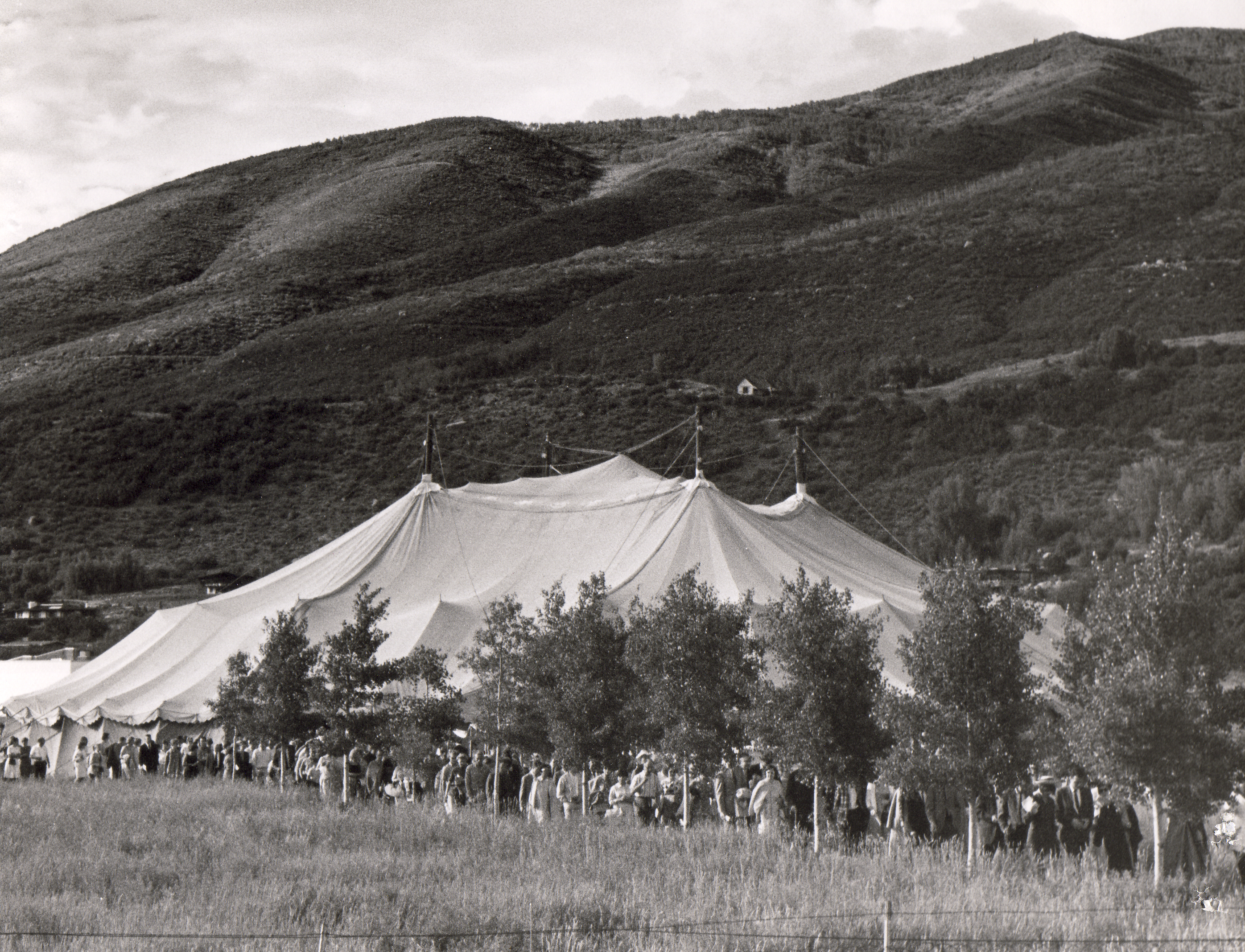
THE FIRST TENT
Eero Saarinen, a Finnish architect, was commissioned by the Paepckes to design the first festival “Tent,” which has become a symbol of our Festival over the years. The Saarinen Ten, as it has come to be called, only held 900 people; its roof was white, and its skirts orange, like those of circus tents. Concertgoers sat on wooden benches while the Festival’s benefactors sat on chairs at the front of the Tent. Ushers in the early days wore uniforms that matched the tent: white tops with orange on bottom. A very western color palette, indeed!
Moving away from its circus roots, Saarinen’s tent was designed without a center pole—as this creates obvious sightline issues for patrons—and utilized four poles partway round the perimeter, creating a “raised quadrangle” instead of a typical peak in the center of the tent. The entire structure was anchored by chains, using tension to keep the poles upright. When inclement weather rolled through Aspen, the fun at the Tent began.
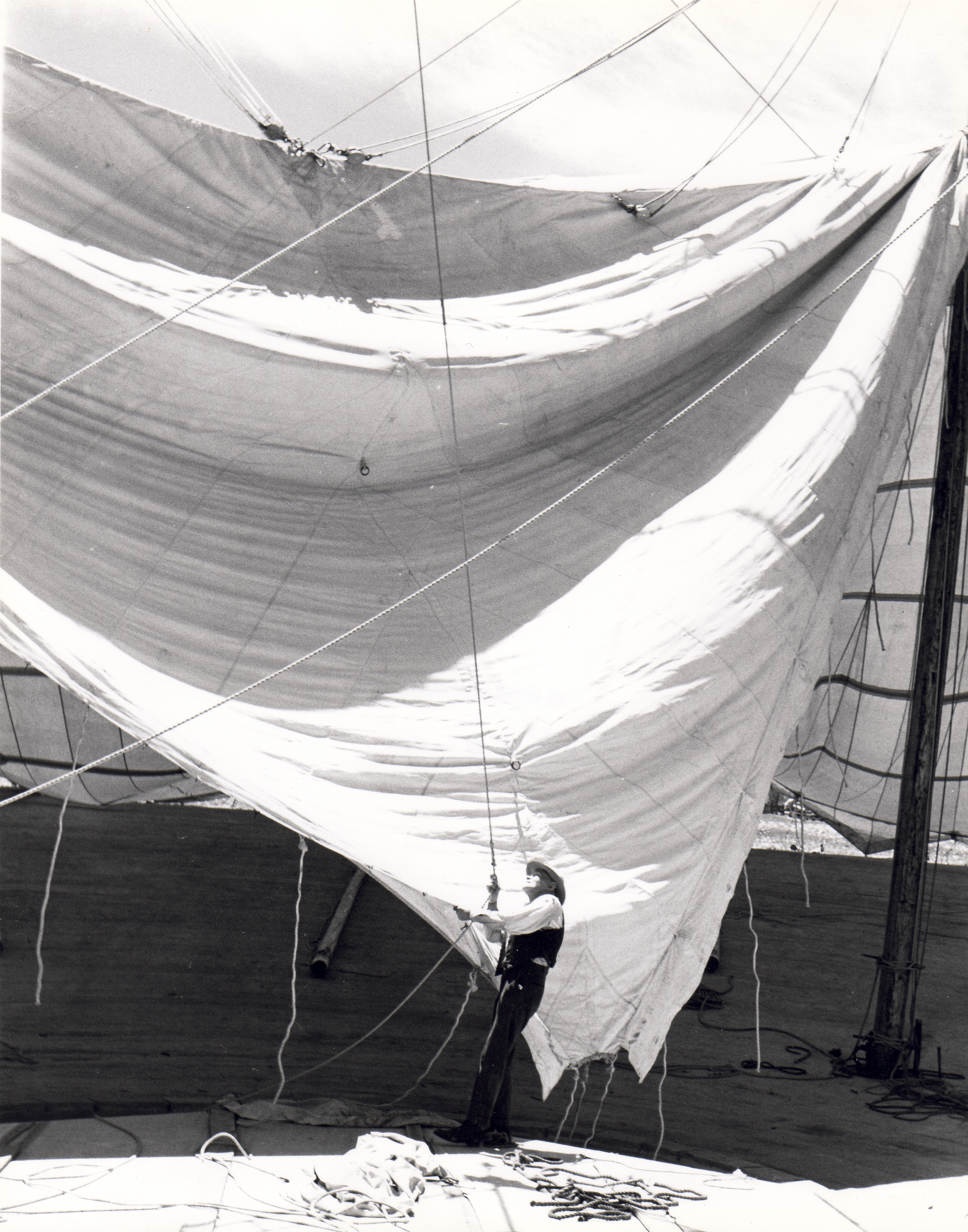
Experiences with this kind of weather reach our imaginations’ most ridiculous heights, running the gamut . . .
from distraction: “Through the flaps you could see horses running around before the storm.” —Mary Norris
to safety hazards: “On a windy day the wooden poles would actually lift off the ground and you wondered whether the whole Tent would topple.” —Stuart Sankey
“The Tent poles would bang on the cement during the wind and the chains would rattle. The old bearded caretaker would come out and batten the hatches—it was exciting.”
Marry Norris
and performance interruptions: “[Virgil Thomson’s Stabat mater] was scarcely heard because of the pounding of rain on the Tent top.” —The Aspen Times
“In the early days it would rain so much there would be standing water on the stage. Once Beveridge Webster played the piano in a huge puddle, tapping his feet and splashing the audience. Another time George Gaber was doing a piece for electrified percussion and all we could think of was the currents going through all that water.”
Mary Norris
Additionally, nothing connected the Tent to the Shed that acted as dressing rooms and warm-up spaces in those days. (By “warm-up space” we really mean a prep room; any noise made in the Shed was audible in the Tent, making any rehearsing prior to the performance impossible.) Getting performers from the Shed to the Tent in the rain forced a number of performers to walk through water and mud in their formal attire, with nothing but an umbrella to keep the weather at bay.
Zara Nelsova had such an experience that she recounted for our archives years later:
“There was no connection between the shed and the Tent, and invariably we had a storm before the afternoon concert. Sam Flor, the orchestral personnel manager, would hold up his big umbrella while I slithered across the board that was the only way in, holding my cello and hoping my gown wouldn’t pick up the mud on either side, then walked on and played.”
Zara Nelsova

Can you imagine an artist today having such an experience and returning year-after-year? It seems almost impossible for our modern minds to understand, but it was a different time in our history.
Nature has been a huge part of the Festival since its inception, but seeing animals inside the Tent is not what typically comes to mind when we think of “nature.” Dogs and gophers were the most common animals that wandered into the Tent. One story tells of a performance by Eudice Shapiro, where a large black dog trotted up onto the stage to smell an artificial rose on Shapiro’s dress. The Tent manager scooped up the dog and carried him offstage. Gophers also found their way into the Tent on a semi-regular basis, running in to escape the dogs outside the Tent, only to find that the dogs have followed them into the Tent. The gophers would dive under the stage to get away from the barking dogs at their heels; effectively stopping any ongoing concert in its tracks. One year, a violinist’s son became the designated dogcatcher for Tent performances.
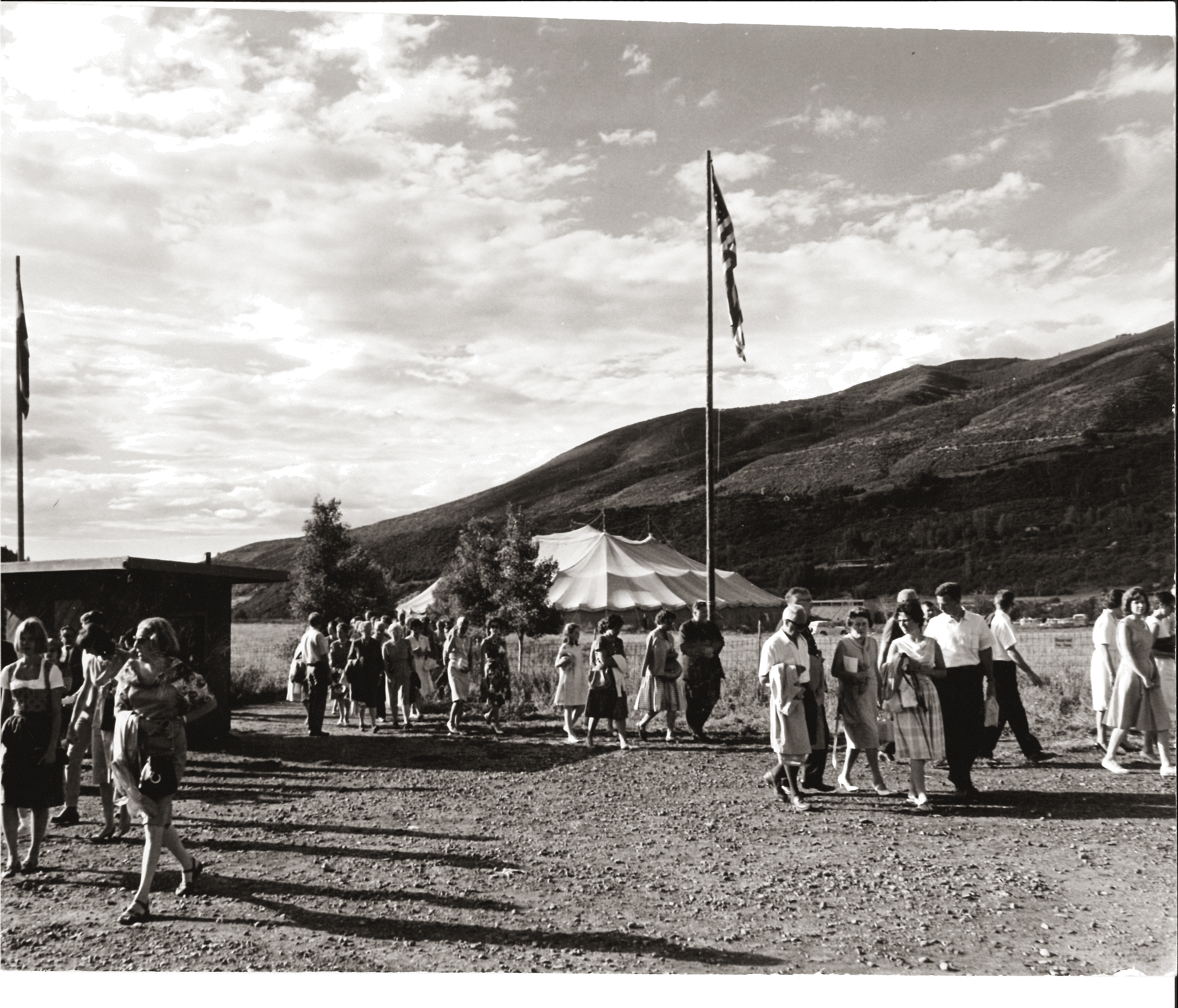
Despite the many issues the former tent presented to the concert experience, the Aspen Music Festival thrived in those early years, providing an idyllic paradise for music lovers. It’s almost as if the design flaws were charming and made performances more personal for concertgoers. Whatever the case, Saarinen’s Tent stood in the meadow for a decade and a half before it came time to replace it—this time with something more permanent, as Saarinen himself had not designed the Tent to be packed and re-pitched each year [though, it was], causing wear-and-tear that could not be undone.
Tune in later this week for Part II.
*A special note: Our blog posts will not be ending with the Festival Season. Throughout the off-season, we will continue to post about our history and share fun items from our archives. Unfortunately, my assistant editor, Kevin, will be leaving at the end of the week, to continue on with his schooling. Stay tuned for upcoming posts!

