Serious Frivolity: Juggling the Profound and the Lighthearted in Beethoven’s Third and Fifth Cello Sonatas

Guest post:
KEVIN MCBRIEN, PhD Candidate in Musicology, University of California, Santa Barbara

It is rare to see the words “frivolous” and “Beethoven” appear together in the same sentence. By their very nature, pieces such as the Ninth Symphony and Grosse Fugue seem to exude a profound weightiness and automatically warrant descriptors like “monumental,” “pillar,” or “masterwork.” However, it can be easy to forget that Beethoven repeatedly showcased a lighter, even playful side in his music. The importance of his more serious musical expressions cannot be overstated or ignored, but considering the dashes of frivolity present throughout Beethoven’s output can paint a much richer picture. 
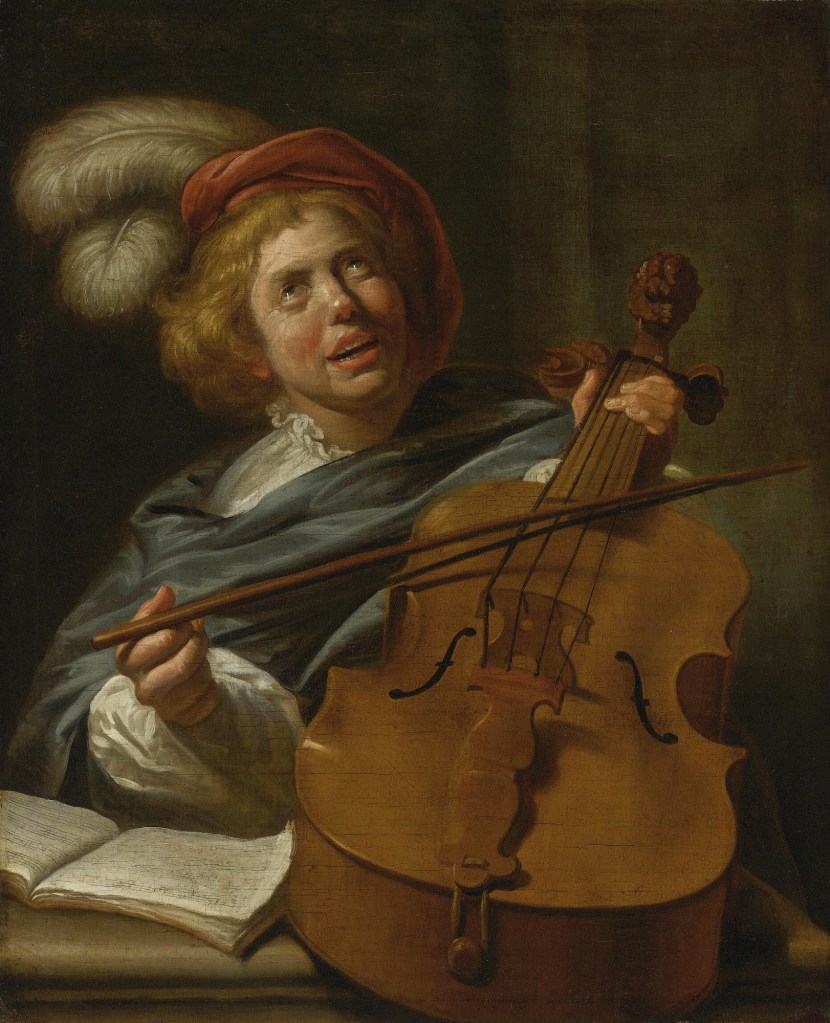
Cello Player, c. 1650 (oil on canvas) by Judith Leyster.

The lighter side of Beethoven’s compositional voice is particularly evident in his Third and Fifth Cello Sonatas. The Third (op. 69), which was composed in 1808 and premiered the following year, opens with a broad and stoic sonata-form movement, often considered to be the most “serious” of musical structures. What follows, though, is a startling shift—a mischievous Scherzo set in A minor (the parallel to the Sonata’s home key of A major) and a springy 3/4 meter. This boisterous movement is riddled with rhythmic trickery; random accents pepper both the piano and cello lines, and seem poised to derail the proceedings at any moment. The music here does little overall to reflect the handwritten dedication Beethoven allegedly penned on the Sonata’s now-lost manuscript—Inter lacrimas et luctum (“amid tears and grief”), perhaps a reference to the arrival of French troops outside Vienna in 1809. In fact, the Sonata as a whole rarely mirrors the anxiety of these events and is a delight from start to finish. 

Similarly, the Fifth Sonata (op. 102, no. 2) also spotlights a rather surprising moment of lightheartedness. Dedicated to Beethoven’s patroness and friend Maria von Erdödy, many scholars pinpoint this 1815 work as one of the earliest signs of Beethoven’s late period. The music of these final years is characterized by boundary-breaking experiments in form, harmony, and rhythm that would become a crucial jumping-off point for countless composers after Beethoven. Sharp juxtapositions in mood are also common throughout his late-period music, and this Sonata is no exception. After the second movement—a solemn, time-suspending Adagio—the cello segues directly into the finale via an inquisitive D-major scale (disguised as an altered A-major scale). After this is quietly echoed by the piano, the cello reiterates the scale once again, but this time it has suddenly become the subject of a spirited fugue. With a few exceptions, fugal finales were still quite unusual at the time of the Sonata’s premiere, and some audience members were puzzled. One less-than-stellar review from 1824 reads: 

“The subject is too cheerful for such a serious execution and for that reason contrasts in too shrill a manner with the two previous movements. How much we would have rather preferred hearing a different movement, a Beethoven finale, instead of this fugue! We wish that Beethoven did not exploit the fugue in such a willful manner, since his great genius is raised well enough above every form.” 

As is so often the case, the joke was on the reviewer and this work—along with Beethoven’s other four Cello Sonatas—have since become cornerstones of the cello repertory. 

While wonderful on their own, these two examples only scratch the surface. Frivolity is present throughout Beethoven’s output. Take the bubbling Scherzo of the “Eroica” Symphony, the celebratory finale of the “Lebewohl” Sonata, the bucolic folk song arrangements. These moments help lift the veil on a composer who is all-too-frequently thought of as a curmudgeonly artist angrily shaking his fist at the world. Of course, frivolity should not be mistaken for haphazardness—Beethoven’s lighthearted music is just as meticulously thought out and crafted as his serious music. Rather, it is in these lighter moments that Beethoven reminds us that to be human is to experience the gamut of emotions, whether it be quiet despondency or unbridled joy. Frivolity is just another part of the richness of life and for Beethoven, that is serious business.

Kevin McBrien is a Southern California-based musicologist, writer, editor, and speaker who has a passion for connecting others with classical music. A PhD candidate in musicology at the University of California, Santa Barbara, his current research explores connections between émigré composers and the Los Angeles Philharmonic in the 1930s & 1940s. Kevin is also an avid program and liner note annotator, and his writings have appeared at the Aspen Music Festival and School, Salida Aspen Concerts, and Music Academy of the West, and in album releases by Chavdar Parashkevov, Natasha Kislenko (Beethoven, Brahms, Mahler: Works for Violin and Piano, 2018), and Sung Chang (forthcoming). Additionally, he has curated a classical music blog since 2017.  
Withdrawn from the Diversions of Society: Seclusion and Beethoven’s Chamber Music

Guest Post:
SARAH CLEMMENS WALTZ, Associate Professor and Program Director for Music History, University of the Pacific

What is chamber music for? Unlike our modern experience of music, it was the way most music was made in Beethoven’s time. Indeed, chamber music was often for making more than for listening: a sort of musical socializing in which musicians experienced music together and communicated to each other through the music that privileged witnesses could also hear. It can be surprising to realize that, in Beethoven’s time, even virtuosic piano works like the Hammerklavier Sonata (probably, in 1818, the most difficult piano work to that date) were meant for the gratification of the player and a private circle, with no public platform such as a piano recital to emerge until some years after Beethoven’s death. “Private” performances, however, might still impress a number of important listeners, such as if the work were played in an aristocratic home or salon.  

Beethoven, as a pianist, probably imagined himself performing the piano role of any music involving the instrument, but his own performances declined as his deafness increased. His final public performance in early 1815 was the last gasp of what had once been the career of a performing virtuoso pianist. Beethoven’s deafness, which he realized was incurable around 1802, became profound by 1816–17; to that and to his mercurial gastrointestinal illness he attributed his increasing isolation from others.  

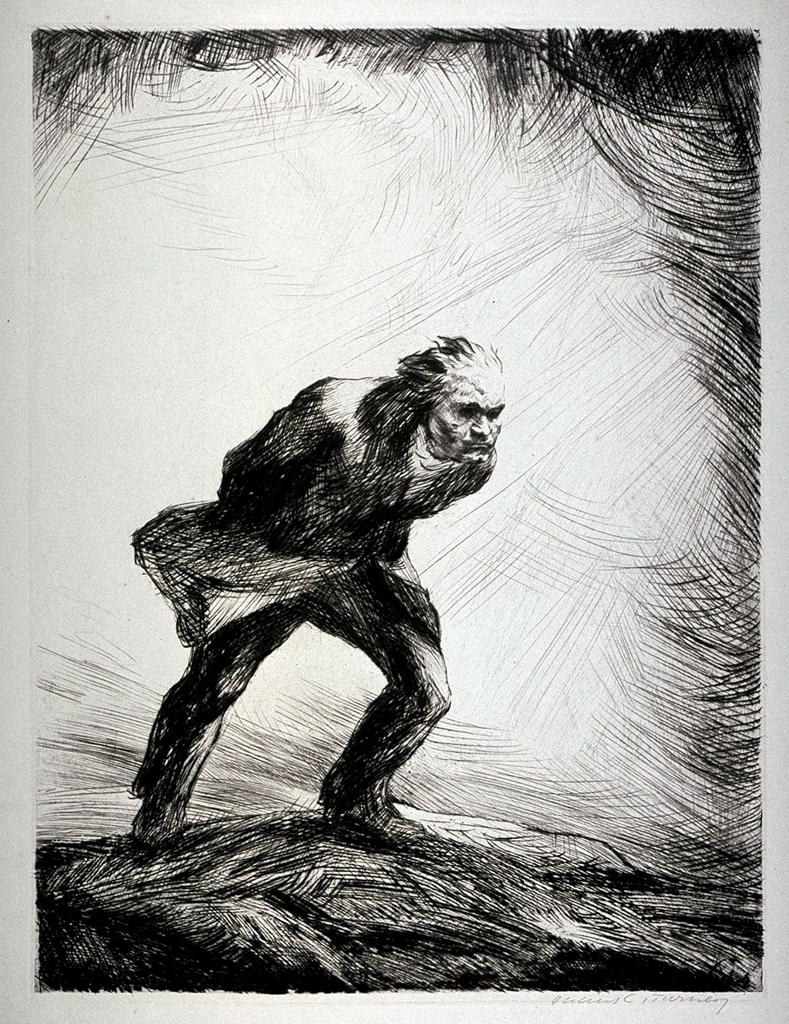
Beethoven on the Mountain, 1922 (drypoint) by Julius C. Turner. San Francisco Museum of Art/Achenbach Foundation for the Graphic Arts

Although we have often conceived of Beethoven’s middle and late years as a battle with deafness and illness, it is his battle with isolation which is perhaps most moving and with which we can all identify today. Beethoven’s need for human connection and simultaneous inability to fully achieve it—common to the human condition—is visible in almost every aspect of his biography: his family relationships, his fraught interactions with his teacher Haydn, his alternation between relying on patrons and fierce independence from them, his conflicts concerning his unmarried state, and of course the cri du coeur in the 1802 Heiligenstadt Testament—essentially a will in which Beethoven reveals the heartbreaking tension between his desire for companionship and need to avoid it: 

Though born with a fiery, lively temperament, susceptible to the diversions of society, I soon had to withdraw myself, to spend my life alone. And if I wished at times to ignore all this, oh how harshly was I pushed back by the doubly sad experience of my bad hearing; and yet it was impossible for me to say to people, ‘Speak louder, shout, for I am deaf.’

[F]or me there can be no relaxation in human company, no refined conversations, no mutual outpourings. I must live quite alone, like an outcast; I can enter society practically only as much as real necessity demands.

trans. Barry Cooper

Beethoven notes that period of uncertainty around his hearing stretches back six years to 1796, and thus includes many of his early-period works: the first 8 violin sonatas (such as the Opus 12 set and the popular Spring Sonata Opus 24), the Opus 18 string quartets, many wind chamber works, and piano sonatas such as Opus 27 No. 2 Sonata quasi una fantasia, known as the Moonlight Sonata.  

Beethoven’s enduring popularity is partly because listeners and performers relate to what they find to be expressed through his music. Beethoven himself claimed that he often had a “poetic idea” behind his works and sometimes complained that listeners were less perceptive than they had once been. Whatever he intended to communicate, it is certain that the most enduring popularity has attached to works that conveyed some poetic idea via a title, even if that title was not given by Beethoven. The Spring Sonata and Moonlight Sonata are titles inspired by the reception of listeners, rather than given by the composer, although stylistic hallmarks (such as from the “pastoral” or “nocturne/moonlight” styles respectively) are present in the music to support listeners’ ideas.  

Though Beethoven may not have intended to express it, today we cannot help but to identify with his isolation, and perhaps even with the dark thoughts that led him to write a will. It is worth remembering that he also wrote in that document:  

Such incidents brought me almost to despair; a little more and I would have ended my life. Only my art held me back. Ah, it seemed to me impossible to leave the world until I had produced all that I felt was within me[.]

Thus Beethoven’s answer to isolation was to continue to communicate with the art he made, until he could make it no more.

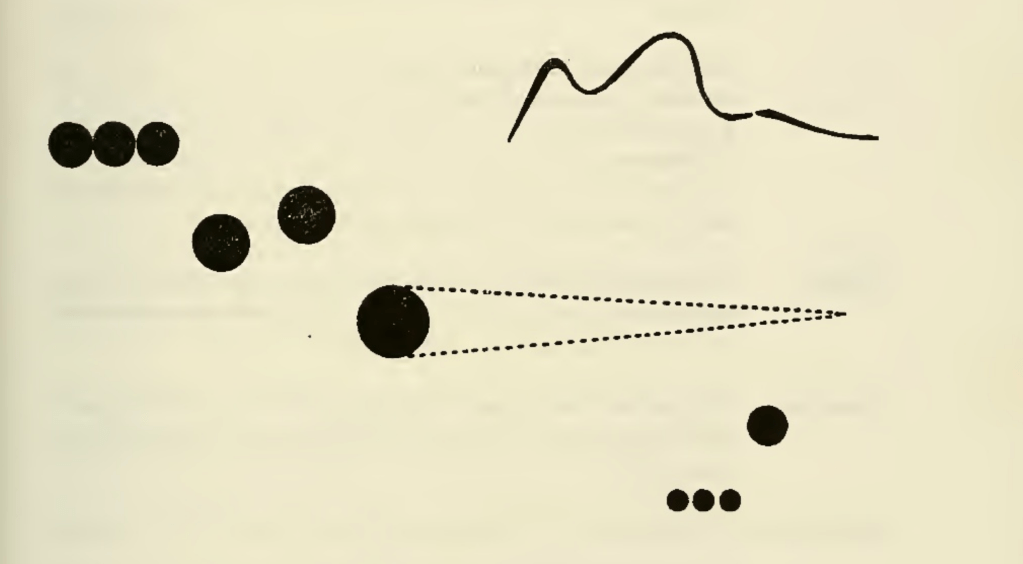
Point and Line to Plane, 1923 (monograph) by Wassily Kandinsky. Solomon R. Guggenheim Foundation for the Museum of Non-Objective Painting

Sarah Clemmens Waltz holds both a BA in physics from Oberlin College and a BM in musicology from Oberlin Conservatory, where she also studied flute with Michel Debost and Kathleen Chastain. She received her PhD in Music History from Yale University in May 2007. Her dissertation, The Highland Muse in Romantic German Music, concerns the image of Scotland in late eighteenth and early nineteenth-century German composition and criticism. 

Dr. Waltz has published Beethoven-related articles in Beethoven Forum and the Beethoven Journal; an essay on “Mendelssohn and the Idea of the North” has just been published in the volume Rethinking Mendelssohn (Oxford, 2020). She also has published German Settings of Ossianic Texts 1770-1815 (A-R Editions, 2016). Current projects include the musical thought of astronomer William Herschel and continued work on northern inspiration in German romanticism.

The Aspen Music Festival “Tent” from the Beginning to Now: Part II

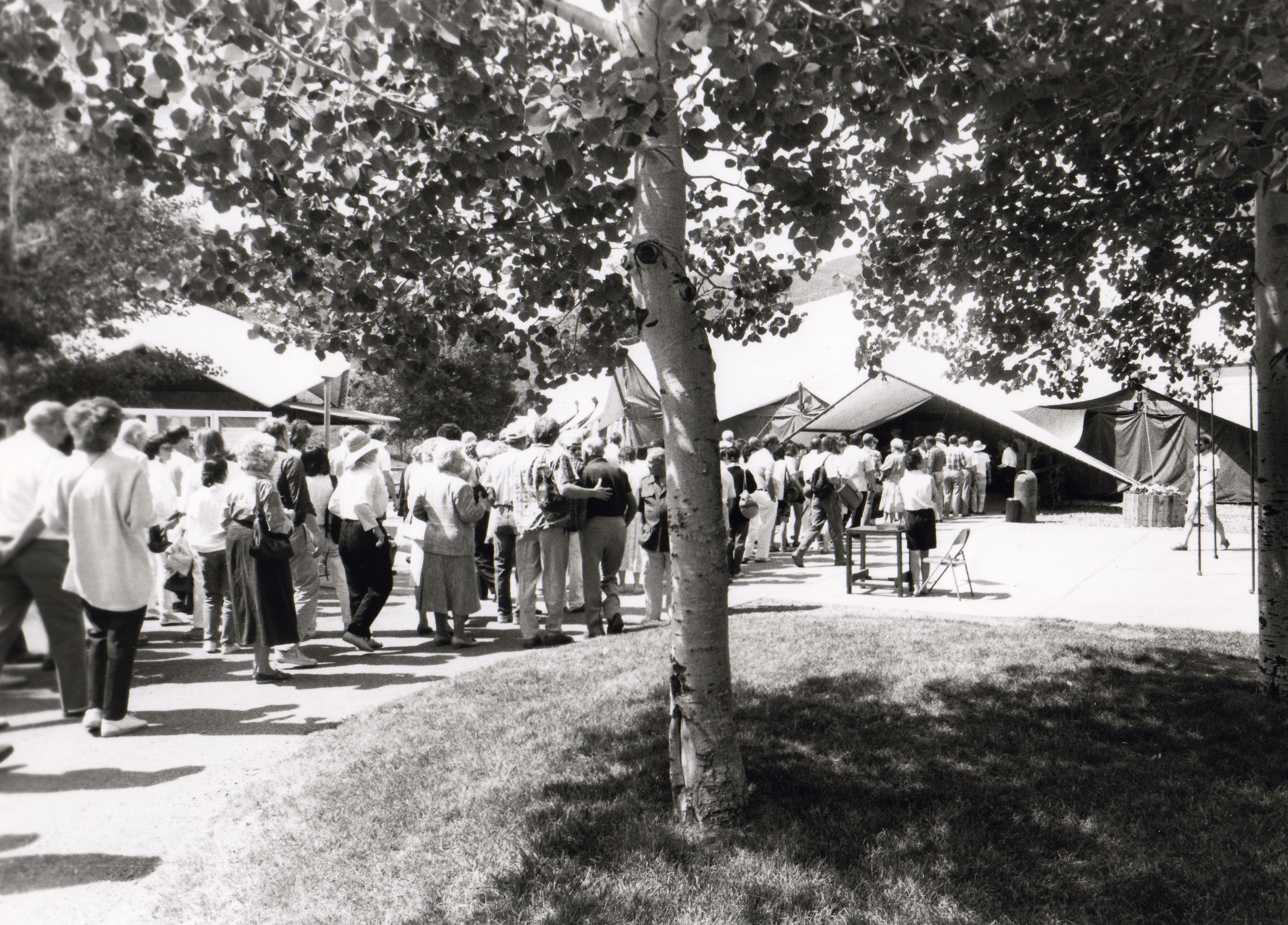
Outside the Bayer-Benedict Tent, 1987. Photo by Charles Abbott.

THE SECOND TENT: THE BAYER-BENEDICT TENT

Given that Saarinen’s design was a temporary fixture and that snow nearly destroyed the first Tent in the summer of 1965, a new, slightly more permanent Tent had to be created. The Aspen public, however, were not all fond of replacing the original Tent. Their chief reasons being that the original Tent provided a casual atmosphere that fit the town, and it provided and “openness” to the mountains that made it a unique performance venue. 

When an article in The Aspen Times casually mentioned that Herbert Bayer—a Bauhaus architect who had previously helped design the renovation of the Wheeler Opera House—would replace the Saarinen Tent with a permanent structure, the people of Aspen were upset, as for many years, they had housed, fed, and donated various items and services to help the Festival run smoothly; it was their Festival, too. Additionally, many felt that the designs of the new Tent should be made visible to the public prior to construction, and when the first designs were released in the Times, they were received poorly, and the design was withdrawn. One person, in a letter to The Aspen Times, claimed that Bayer’s first design reminded them of “Muzak speakers in the throes of connubial bliss.” 

Continue reading “The Aspen Music Festival “Tent” from the Beginning to Now: Part II”

The Aspen Music Festival “Tent” from the Beginning to Now: Part I

“See you at the Tent!” is a common phrase heard all summer long in Aspen. However, the current Tent is not the only tent that has served as a gathering place and performance venue for the Festival, unsurprisingly. A few iterations have stood near its current location and have brought their own challenges for both the concertgoer and performer, alike, creating a unique and entertaining history to be remembered.

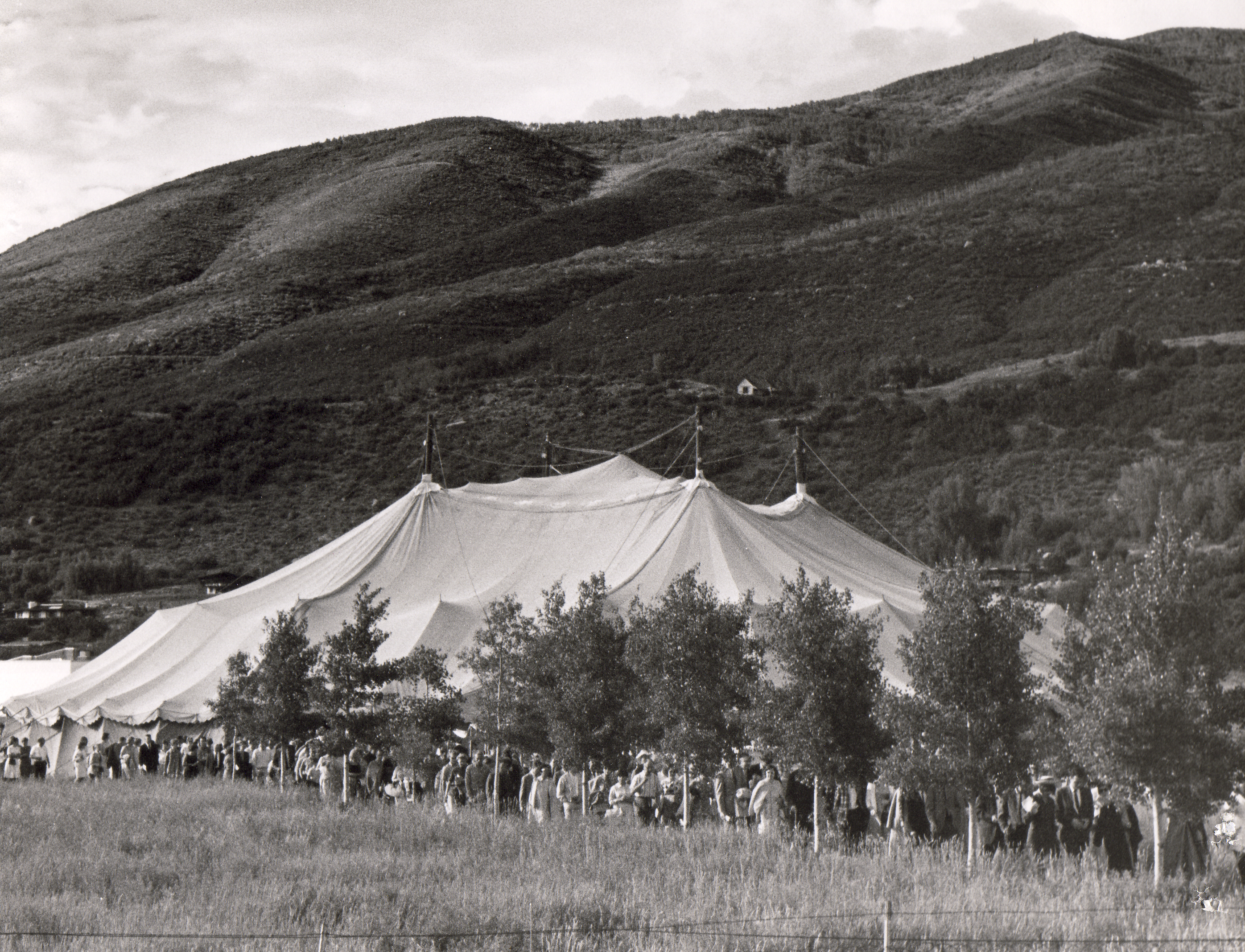
Photo by Margaret Durrance

THE FIRST TENT

Eero Saarinen, a Finnish architect, was commissioned by the Paepckes to design the first festival “Tent,” which has become a symbol of our Festival over the years. The Saarinen Ten, as it has come to be called, only held 900 people; its roof was white, and its skirts orange, like those of circus tents. Concertgoers sat on wooden benches while the Festival’s benefactors sat on chairs at the front of the Tent. Ushers in the early days wore uniforms that matched the tent: white tops with orange on bottom. A very western color palette, indeed!  

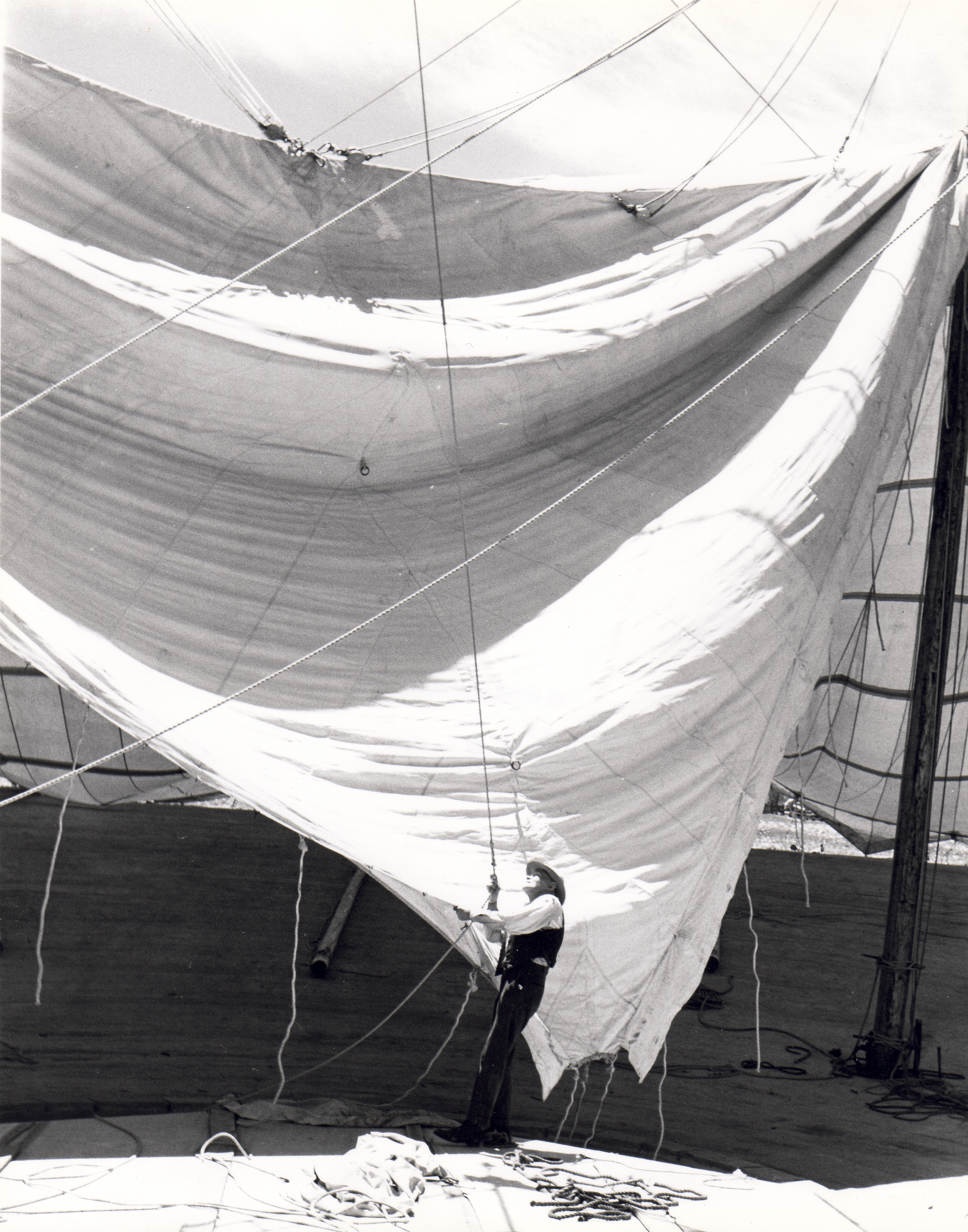
Moving away from its circus roots, Saarinen’s tent was designed without a center pole—as this creates obvious sightline issues for patrons—and utilized four poles partway round the perimeter, creating a “raised quadrangle” instead of a typical peak in the center of the tent. The entire structure was anchored by chains, using tension to keep the poles upright. When inclement weather rolled through Aspen, the fun at the Tent began. 

Photo by Margaret Durrance
Continue reading “The Aspen Music Festival “Tent” from the Beginning to Now: Part I”

New Music in the Mountains: Commissions and Premieres at the Aspen Music Festival

Alongside presenting classic orchestral, chamber, and operatic works, contemporary music has played a central role since the early days of the Aspen Music Festival. Brand-new and recent compositions have peppered the calendar of almost every summer season and the city of Aspen has played host to some of the most prominent and cutting-edge composers of the day, including Ernst Krenek, Elliott Carter, Augusta Read Thomas, George Crumb, Olivier Messiaen, and Thomas Adès.

Below are some of the most notable commissions and premieres that have occurred during the Festival’s history, with short blurbs and images provided for a select few. This is by no means a comprehensive list; rather, it is a brief glimpse that demonstrates the Festival’s ongoing commitment to living composers and music of our time.

  • Hans Krása: Trio for Violin, Viola, and Cello (world premiere, 7/11/1951)
  • Alexander Tcherepnin: The Farmer and the Fairy (world premiere, 8/13/1952)

Tcherepnin
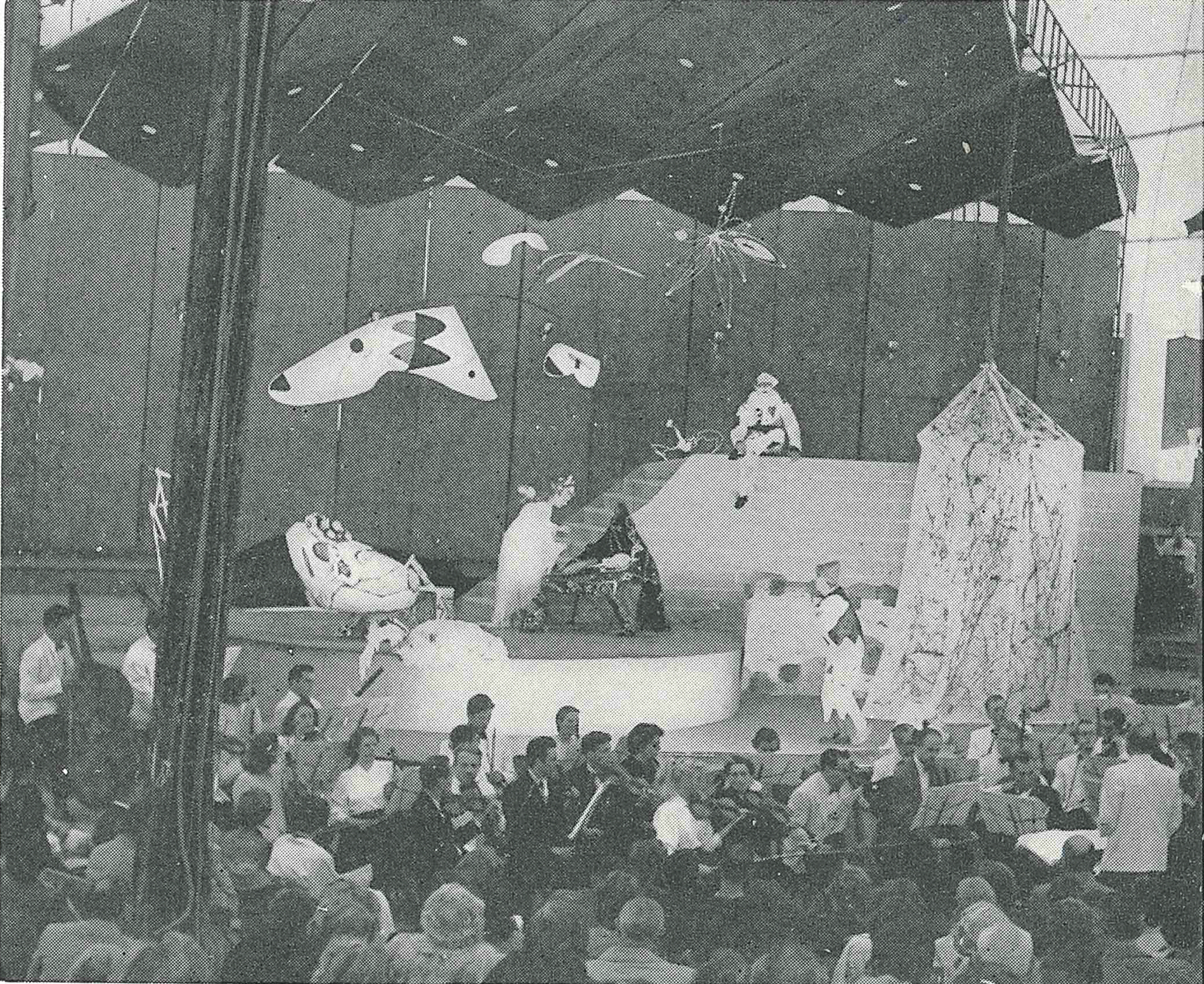
Photo from the world premiere of Alexander Tcherepnin’s opera The Farmer and the Fairy, presented during the Aspen Music Festival’s 1952 season.

  • Julia Perry: Stabat Mater (U.S. premiere, 7/26/1953)
  • William Bolcom: Symphony No. 1 (world premiere, 7/16/1957)
  • Darius Milhaud: Aspen Serenade (commission/world premiere, 8/18/1957)
  • Paul Hindemith: Ite, Angeli Voloces (U.S. premiere, 7/20/1958)
  • Benjamin Britten: Nocturnos for Orchestra, op. 61 (U.S. premiere, 7/12/1959)
  • William Schuman: Violin Concerto (revised version, word premiere, 8/9/1959)
  • Lukas Foss: Time Cycle (new version, world premiere, 8/16/1961)
  • Olivier Messiaen: Le Réveil des Oiseaux (U.S. premiere, 7/29/1962)
  • Olivier Messiaen: Oiseaux exotiques (U.S. premiere, 8/5/1962)

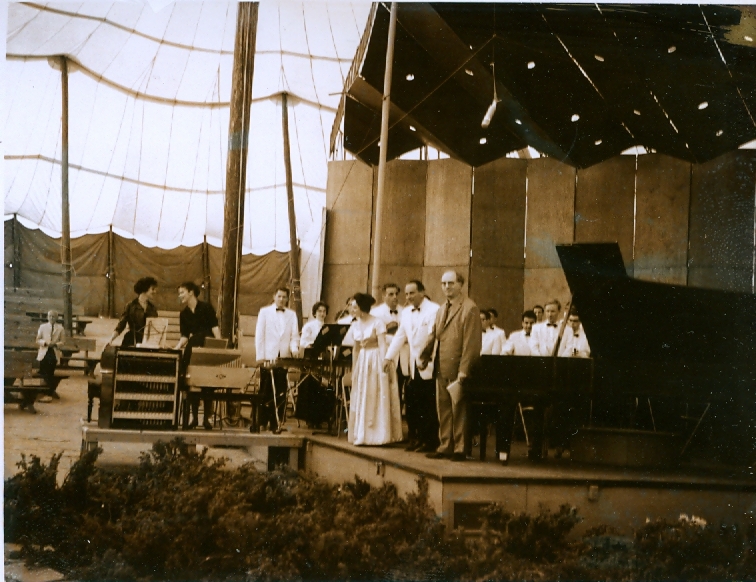
Exotic Birds Perf. Aspen 1962
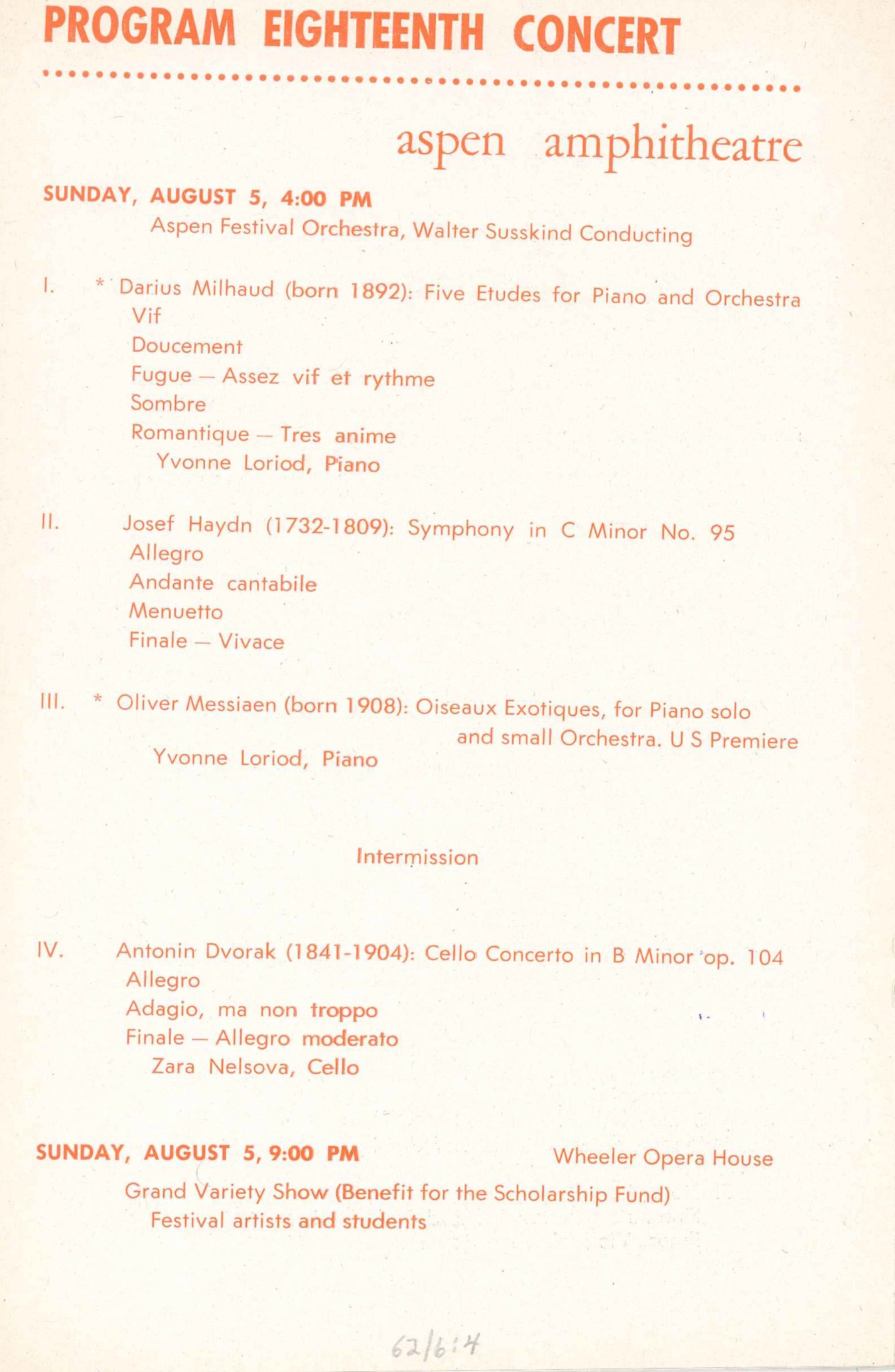
Olivier Messiaen’s Oiseaux exotiques (for piano and wind orchestra) premiered in Paris in 1956, but it took several years for it to receive a performance in the United States. As luck would have it, that first performance was given in Aspen on August 5, 1962, when Messiaen was the visiting composer that summer. Messiaen’s second wife—Yvonne Loriod—performed the piano part and also presented what was billed as her “only U.S. solo recital” a few days prior, on August 3.

Messiaen Program Page
Program page from the first Apsen (and U.S.) performance of Messiaen’s Oiseaux exotiques.

Continue reading “New Music in the Mountains: Commissions and Premieres at the Aspen Music Festival”

Reminiscences of Aspen

Since its inception, the Aspen Music Festival and School has had the privilege to host many distinguished artists, whether as artist-faculty members, guest artists, or composers-in-residence. They’ve come from all over the United States and the world to spend their summer(s) in Aspen and showcase their many talents. With the Festival underway, we thought we would share a few of their reactions to being in this marvelously majestic and unique environment—both in terms of nature and the Festival itself.

“Aspen is already a challenging cultural stimulus. It offers unique educative advantages and the highest selection of music in excellent performances.”

Igor Stravinsky

“Aspen offers a mountain vacation with musical entertainment, unmatched, to my knowledge, in the United States and, I am sure, in Europe as well.”

Virgil Thomson

“A project which may logically result in the establishment of one of the most important centers for art and ideas that this country knows.”

Olin Downes (New York Times critic)

“Aspen is a fascinating place. It is full of youth and big enthusiasm, and to my big  surprise I got very involved in the teaching and helping people. I am very privileged because I have a big percentage of real good voices and it is an immense pleasure for me . . .

You would love it too. I work very hard and very much, but somehow get some rest and fun. The climate is heaven, the nights are cool, sometimes the nights remind me of Jerusalem, especially when the moon is full. Norman Singer is the dean of the music school and he is very bright and loves his job. . . .”

Letter from Jennie Tourel to Leonard Bernstein, July 17, 1957

Continue reading “Reminiscences of Aspen”

Copland in Aspen

“Aaron Copland is—and for forty years has been—so commanding, so vital, and so essential a figure on the American creative musical scene that it is virtually impossible to consider it even generally without his name coming immediately to mind.”

—William Flanigan, Aspen Music Festival 1975 program book

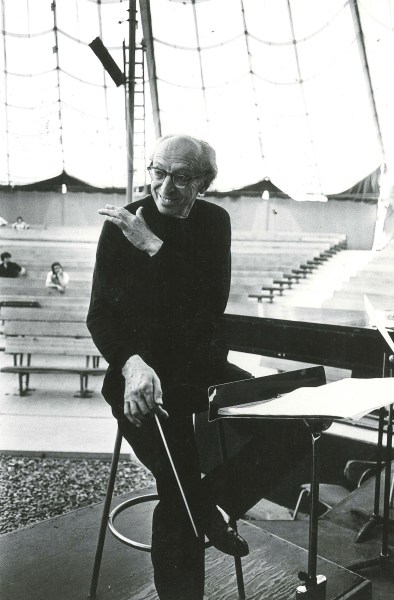
Aaron Copland at the Conference on Contemorary Music, 1975_Charles Abbott
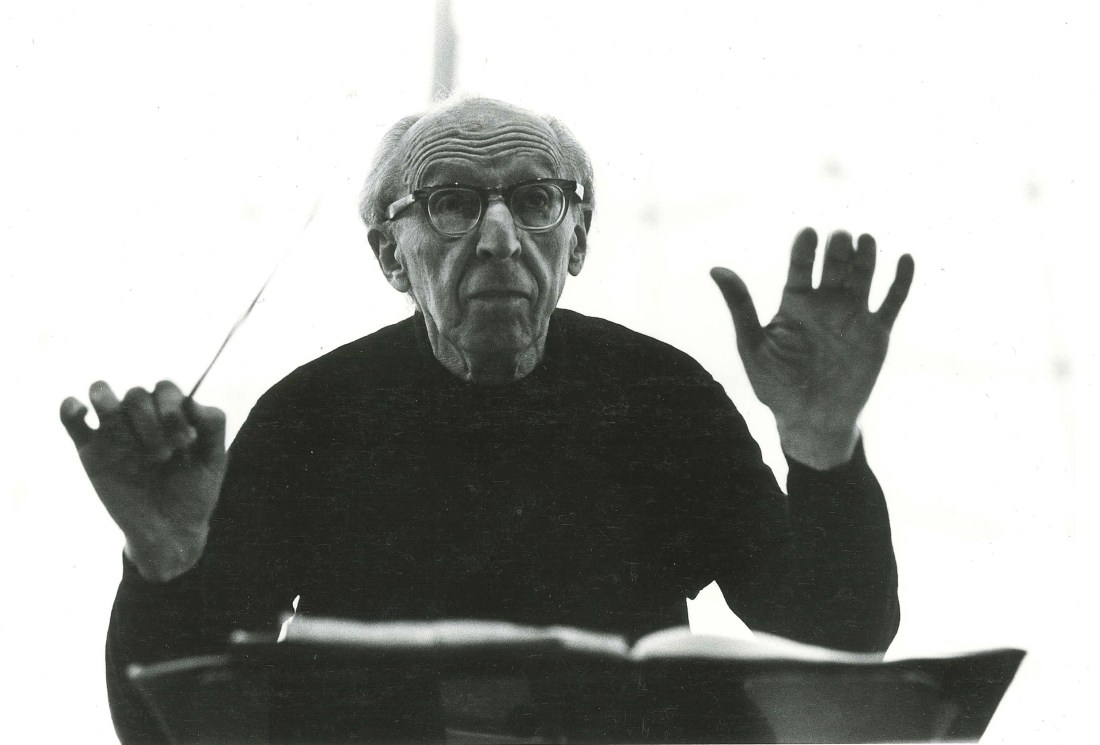
Aaron Copland at the 1975 Conference on Contemporary Music in Aspen (Photo by Charles Abbott)

Though this statement about Copland was penned forty-four years ago, it still resonates strongly—the association between American music and Aaron Copland remain as inseparable today as it did in the twentieth century. So, it’s only fitting that both Copland and his music have played a prominent role throughout the Aspen Music Festival and School’s seventy-year history.

Copland first attended the Festival as a composer-in-residence during the 1960 summer season. Commitments at Tanglewood had prevented him from making an appearance in previous years, but Norman Singer—director and dean of the Aspen Music Festival since 1952—reached out to the composer in August 1959:

“. . . to invite you to be with us next summer when it is our intention to feature your music in celebration of your sixtieth birthday.”

—Letter from Norman Singer to Aaron Copland, August 1959

Copland was already slated to conduct his First Symphony at Tanglewood on August 13 but was able to arrange a flight to Aspen after his Tanglewood performance. He ultimately spent nine days in Aspen that summer (August 15–24), leading workshops, conducting the Aspen Festival Orchestra (in a program which included his Orchestral Variations and Red Pony Suite), and meeting with students. One such student was a young Philip Glass, who recalls their contentious first encounter in his 2015 memoir Words Without Music: Continue reading “Copland in Aspen”