New Music in the Mountains: Commissions and Premieres at the Aspen Music Festival

Alongside presenting classic orchestral, chamber, and operatic works, contemporary music has played a central role since the early days of the Aspen Music Festival. Brand-new and recent compositions have peppered the calendar of almost every summer season and the city of Aspen has played host to some of the most prominent and cutting-edge composers of the day, including Ernst Krenek, Elliott Carter, Augusta Read Thomas, George Crumb, Olivier Messiaen, and Thomas Adès.

Below are some of the most notable commissions and premieres that have occurred during the Festival’s history, with short blurbs and images provided for a select few. This is by no means a comprehensive list; rather, it is a brief glimpse that demonstrates the Festival’s ongoing commitment to living composers and music of our time.

  • Hans Krása: Trio for Violin, Viola, and Cello (world premiere, 7/11/1951)
  • Alexander Tcherepnin: The Farmer and the Fairy (world premiere, 8/13/1952)
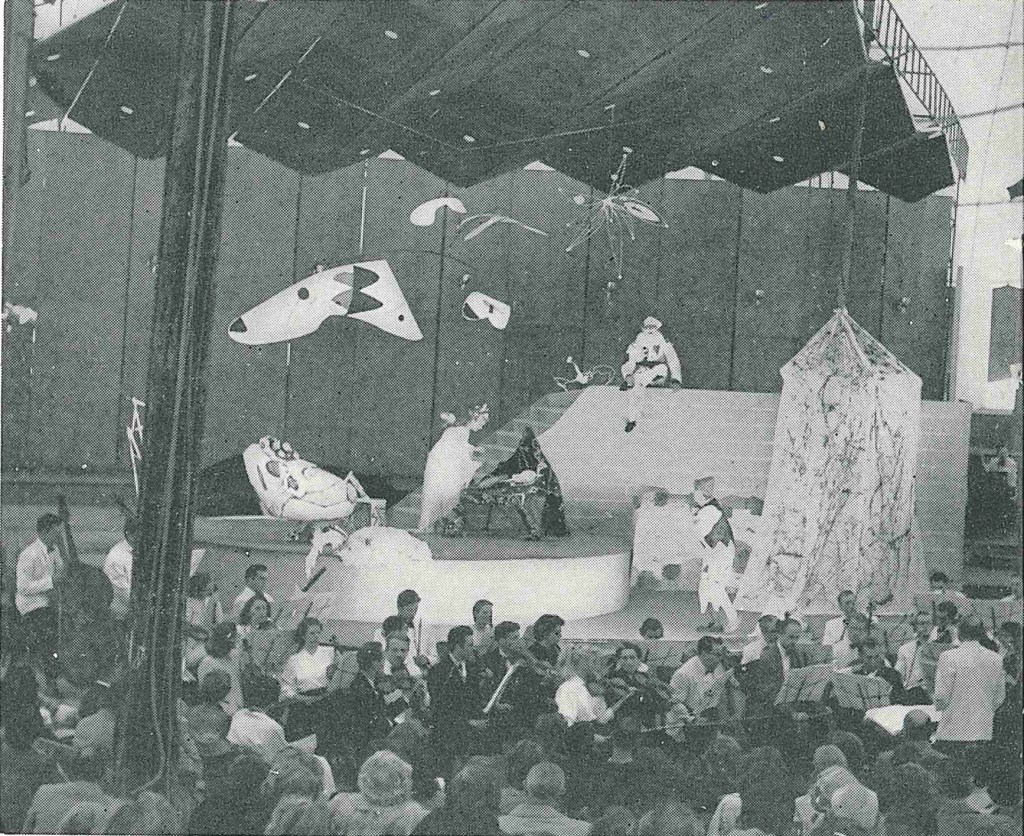
Tcherepnin
Photo from the world premiere of Alexander Tcherepnin’s opera The Farmer and the Fairy, presented during the Aspen Music Festival’s 1952 season.
  • Julia Perry: Stabat Mater (U.S. premiere, 7/26/1953)
  • William Bolcom: Symphony No. 1 (world premiere, 7/16/1957)
  • Darius Milhaud: Aspen Serenade (commission/world premiere, 8/18/1957)
  • Paul Hindemith: Ite, Angeli Voloces (U.S. premiere, 7/20/1958)
  • Benjamin Britten: Nocturnos for Orchestra, op. 61 (U.S. premiere, 7/12/1959)
  • William Schuman: Violin Concerto (revised version, word premiere, 8/9/1959)
  • Lukas Foss: Time Cycle (new version, world premiere, 8/16/1961)
  • Olivier Messiaen: Le Réveil des Oiseaux (U.S. premiere, 7/29/1962)
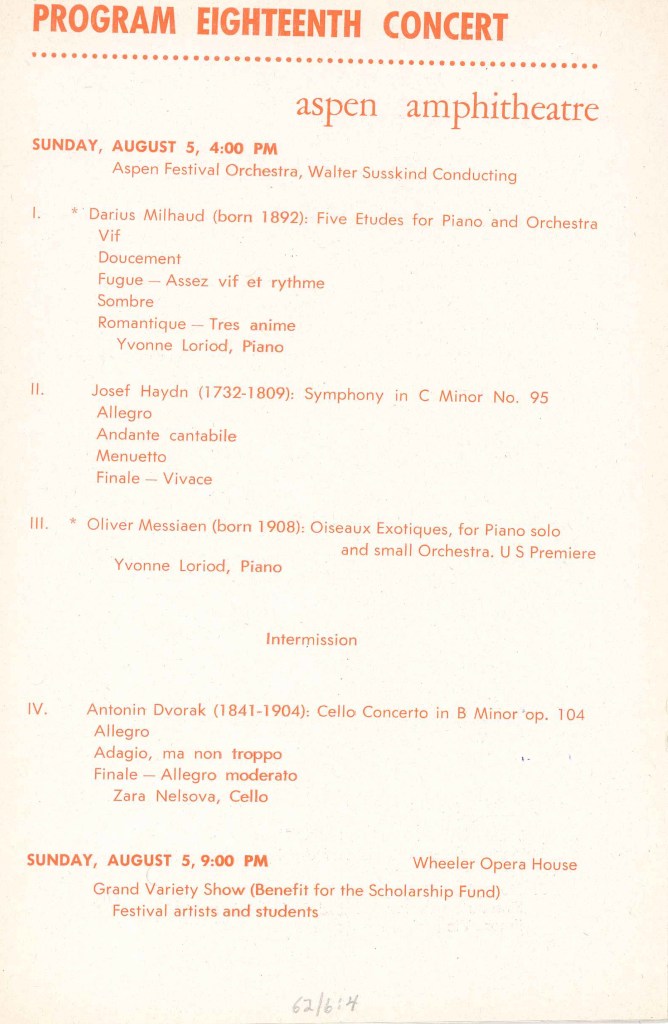
  • Olivier Messiaen: Oiseaux exotiques (U.S. premiere, 8/5/1962)
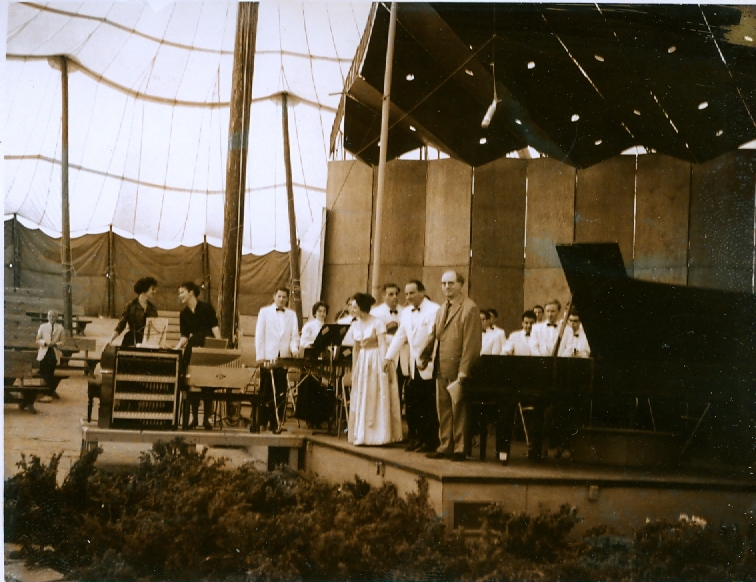
Exotic Birds Perf. Aspen 1962
Olivier Messiaen’s Oiseaux exotiques (for piano and wind orchestra) premiered in Paris in 1956, but it took several years for it to receive a performance in the United States. As luck would have it, that first performance was given in Aspen on August 5, 1962, when Messiaen was the visiting composer that summer. Messiaen’s second wife—Yvonne Loriod—performed the piano part and also presented what was billed as her “only U.S. solo recital” a few days prior, on August 3.
Messiaen Program Page
Program page from the first Apsen (and U.S.) performance of Messiaen’s Oiseaux exotiques.

Continue reading “New Music in the Mountains: Commissions and Premieres at the Aspen Music Festival”
Copland in Aspen

“Aaron Copland is—and for forty years has been—so commanding, so vital, and so essential a figure on the American creative musical scene that it is virtually impossible to consider it even generally without his name coming immediately to mind.”

—William Flanigan, Aspen Music Festival 1975 program book

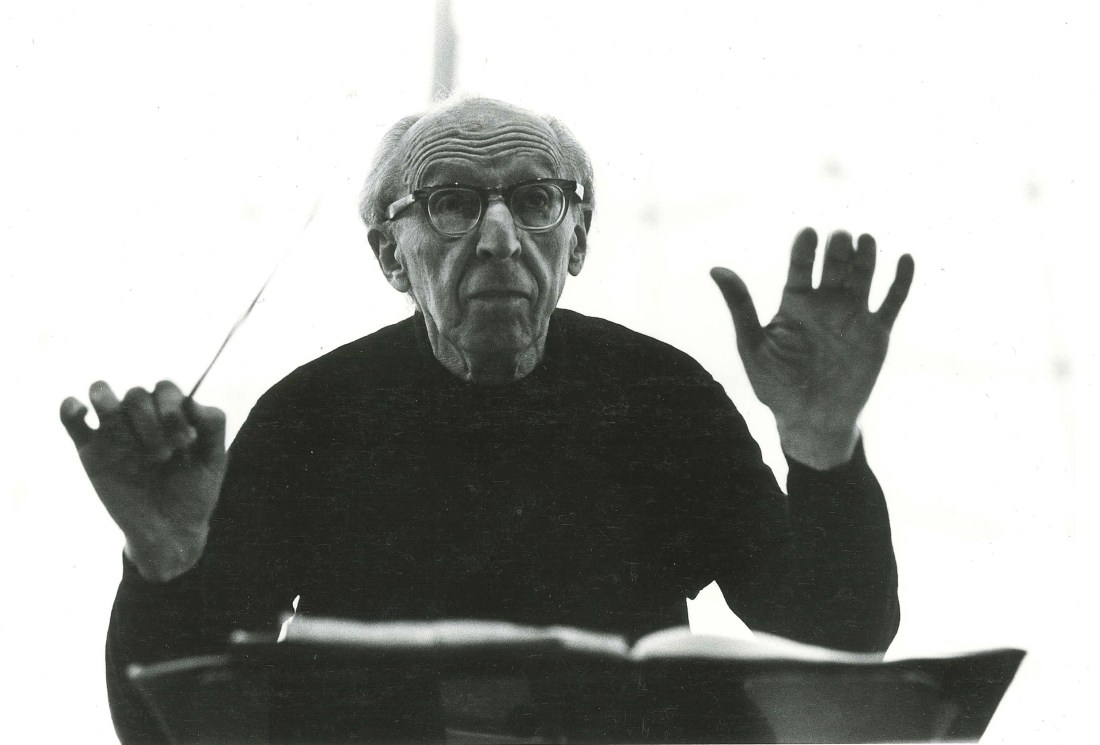
Aaron Copland at the Conference on Contemorary Music, 1975_Charles Abbott
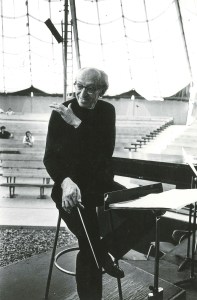
Aaron Copland at the 1975 Conference on Contemporary Music in Aspen (Photo by Charles Abbott)

Though this statement about Copland was penned forty-four years ago, it still resonates strongly—the association between American music and Aaron Copland remain as inseparable today as it did in the twentieth century. So, it’s only fitting that both Copland and his music have played a prominent role throughout the Aspen Music Festival and School’s seventy-year history.

Copland first attended the Festival as a composer-in-residence during the 1960 summer season. Commitments at Tanglewood had prevented him from making an appearance in previous years, but Norman Singer—director and dean of the Aspen Music Festival since 1952—reached out to the composer in August 1959:

“. . . to invite you to be with us next summer when it is our intention to feature your music in celebration of your sixtieth birthday.”

—Letter from Norman Singer to Aaron Copland, August 1959

Copland was already slated to conduct his First Symphony at Tanglewood on August 13 but was able to arrange a flight to Aspen after his Tanglewood performance. He ultimately spent nine days in Aspen that summer (August 15–24), leading workshops, conducting the Aspen Festival Orchestra (in a program which included his Orchestral Variations and Red Pony Suite), and meeting with students. One such student was a young Philip Glass, who recalls their contentious first encounter in his 2015 memoir Words Without Music: Continue reading “Copland in Aspen”